�
EVANSVILLE, Ind. �� Bob Whitmer was ecstatic�his hard work had paid off.�
It was 2011, and he had just shepherded through a runway extension and other improvements�at Owensboro��s airport in western Kentucky.�
Representatives of the low-cost carrier Allegiant were flying into town to tell Whitmer, the airport director, that Owensboro had landed flights to Las Vegas.�
��This is a dream come true for Owensboro!�� he gushed in a news release touting the service��s launch alongside existing flights to the Orlando area.
But six months later,�amid prohibitive�fuel costs, that dream ended when Allegiant announced it was pulling its Las Vegas route.�
As Evansville celebrates the arrival �� and rapid expansion �� of Allegiant service, words of caution abound that the routes may be short-lived. Perhaps no entity is more honest about that than Allegiant itself. The airline��s rallying cry to the communities it serves: Use it or lose it.�
��Allegiant��s pretty agile,�� said Kristen Schilling-Gonzales, the airline��s director of planning. ��We��re monitoring every flight. We��re looking at every route we operate on a monthly basis, quarterly basis, even more than that.��
Allegiant is unique in that even seemingly successful service sometimes finds itself on the chopping block.�
32 COOL AVIATION PICS: Disney- and Dodgers-themed jets, 747s and more�(story continues below)
FacebookTwitterGoogle+LinkedIn32 cool aviation pics: Disney- and Dodgers-themed jets, 747s and more Fullscreen

Post to FacebookPosted!
A link has been posted to your Facebook feed.
![Westjet's 'Frozen' themed Disney jet departs Vancouver]()
Westjet's 'Frozen' themed Disney jet departs Vancouver International Airport on Dec. 15, 2016. Jeremy Dwyer-Lindgren, special for USA TODAYFullscreen
![Cargo jets for UPS, top, and FedEx, bottom, trade places]()
Cargo jets for UPS, top, and FedEx, bottom, trade places at Anchorage International Airport on Dec. 3, 2016. Jeremy Dwyer-Lindgren, special for USA TODAYFullscreen
![Outfitted for marine surveillance, a Canadian Government]()
Outfitted for marine surveillance, a Canadian Government Dash-8 departs Vancouver International Airport in December 2016. Jeremy Dwyer-Lindgren, special for USA TODAYFullscreen
![A gaggle of partially completed Boeing KC-46 tankers]()
A gaggle of partially completed Boeing KC-46 tankers awaits their fate while parked at Paine Field near Everett, Wash., in December 2016. Jeremy Dwyer-Lindgren, special for USA TODAYFullscreen
![A Pacific Coastal Beech 1900D taxis in to a small domestic]()
A Pacific Coastal Beech 1900D taxis in to a small domestic terminal at Vancouver International Airport on Dec. 15, 2016. Jeremy Dwyer-Lindgren, special for USA TODAYFullscreen
![An Augusta Westland 139 helicopter lands at Vancouver]()
An Augusta Westland 139 helicopter lands at Vancouver International Airport on Dec 15, 2016. Jeremy Dwyer-Lindgren, special for USA TODAYFullscreen
![Snow covers a Cessna seaplane on a very cold day at]()
Snow covers a Cessna seaplane on a very cold day at the Lake Hood Seaplane Base in Anchorage, Alaska, in December 2016. Jeremy Dwyer-Lindgren, special for USA TODAYFullscreen
![A Lufthansa Boeing 747-400 departs Vancouver International]()
A Lufthansa Boeing 747-400 departs Vancouver International Airport on Dec. 15, 2016. Jeremy Dwyer-Lindgren, special for USA TODAYFullscreen
![A Virgin Atlantic Boeing 787-9 takes off for London]()
A Virgin Atlantic Boeing 787-9 takes off for London from San Francisco International Airport on Oct. 23, 2016. Jeremy Dwyer-Lindgren, special for USA TODAYFullscreen
![A KD Air Piper Navajo Chieftan taxies to a gate after]()
A KD Air Piper Navajo Chieftan taxies to a gate after landing at Vancouver International Airport on Dec. 15, 2016. Jeremy Dwyer-Lindgren, special for USA TODAYFullscreen
![An Alaska/Horizon Bombardier Q400 painted in an Oregon]()
An Alaska/Horizon Bombardier Q400 painted in an Oregon Ducks livery taxis for departure as a Virgin America Airbus A319 takes off from Seattle-Tacoma International Airport on Dec. 24, 2016. Jeremy Dwyer-Lindgren, special for USA TODAYFullscreen
![An Air Canada Boeing 777-300 departs Vancouver International]()
An Air Canada Boeing 777-300 departs Vancouver International Airport on Dec. 15, 2016. Jeremy Dwyer-Lindgren, special for USA TODAYFullscreen
![Pilots aboard a UPS Boeing 747 don Santa hats as they]()
Pilots aboard a UPS Boeing 747 don Santa hats as they ready for a flight across the Pacific on Dec. 3, 2016 in Anchorage, Alaska. Jeremy Dwyer-Lindgren, special for USA TODAYFullscreen
![A China Eastern Airbus A330 takes off from Vancouver]()
A China Eastern Airbus A330 takes off from Vancouver International Airport on Dec. 15, 2016. Jeremy Dwyer-Lindgren, special for USA TODAYFullscreen
![An Air China Boeing 747-400 lands at Anchorage International]()
An Air China Boeing 747-400 lands at Anchorage International Airport on Dec. 3, 2016. Jeremy Dwyer-Lindgren, special for USA TODAYFullscreen
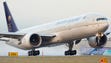
![A Saudi Arabian Boeing 777-300 delivers from Paine]()
A Saudi Arabian Boeing 777-300 delivers from Paine Field in Everett, Wash., on Dec. 24, 2016. Jeremy Dwyer-Lindgren, special for USA TODAYFullscreen
![The winter holiday travel season was one of the busiest]()
The winter holiday travel season was one of the busiest ever in 2016-17. Here crowds pulse through Charlotte Douglas International Airport on Jan. 4, 2017. Ben Mutzabaugh, USA TODAYFullscreen
![An unfinished Boeing 747-8 rests outside at Paine Field,]()
An unfinished Boeing 747-8 rests outside at Paine Field, near Everett, WA, in December of 2016. Jeremy Dwyer-Lindgren, special for USA TODAYFullscreen
![The Caribbean Sea and Mexico's Yucatan coastline as]()
The Caribbean Sea and Mexico's Yucatan coastline as seen from American Airlines Flight 886 from Cancun to Charlotte. Ben Mutzabaugh, USA TODAYFullscreen
![Jets at one of San Francisco International Airport's]()
Jets at one of San Francisco International Airport's international concourses in October 2016. Jeremy Dwyer-Lindgren, special for USA TODAYFullscreen
![A Centurion Cargo Boeing 747-400 takes off from Anchorage]()
A Centurion Cargo Boeing 747-400 takes off from Anchorage International Airport in December 2016. Jeremy Dwyer-Lindgren, special for USA TODAYFullscreen
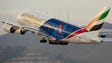
![An Emirates Airbus A380 departs for Dubai from San]()
An Emirates Airbus A380 departs for Dubai from San Francisco International Airport on Oct. 23, 2016. Jeremy Dwyer-Lindgren, special for USA TODAYFullscreen
![A United Airlines Boeing 777-300 takes off on a delivery]()
A United Airlines Boeing 777-300 takes off on a delivery flight from Paine Field, near Everett, Wash,, in late December, 2016. Jeremy Dwyer-Lindgren, special for USA TODAYFullscreen
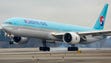
![A Korean Air Boeing 777-300 lands at Seattle-Tacoma]()
A Korean Air Boeing 777-300 lands at Seattle-Tacoma International Airport on Dec. 24, 2016. Jeremy Dwyer-Lindgren, special for USA TODAYFullscreen
![A Hawaiian Airbus A330 takes off from Seattle-Tacoma]()
A Hawaiian Airbus A330 takes off from Seattle-Tacoma International Airport on Dec. 24, 2016. Jeremy Dwyer-Lindgren, special for USA TODAYFullscreen
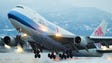
![A China Airlines Cargo Boeing 747 takes off from Anchorage]()
A China Airlines Cargo Boeing 747 takes off from Anchorage International Airport in December 2016. Jeremy Dwyer-Lindgren, special for USA TODAYFullscreen
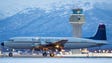
![A rare Everts Air Cargo Douglas DC-6 lands at Anchorage]()
A rare Everts Air Cargo Douglas DC-6 lands at Anchorage International Airport in December 2016. Jeremy Dwyer-Lindgren, special for USA TODAYFullscreen
![A Cargolux Boeing 747-8F freighter jet lands at Anchorage]()
A Cargolux Boeing 747-8F freighter jet lands at Anchorage International Airport on Dec. 4, 2016. Jeremy Dwyer-Lindgren, special for USA TODAYFullscreen
![A Lynden Air Cargo Lockheed C-130 makes an aggressive]()
A Lynden Air Cargo Lockheed C-130 makes an aggressive landing approach to Anchorage International Airport in December 2016. Jeremy Dwyer-Lindgren, special for USA TODAYFullscreen
![An EVA Air Cargo Boeing 747-400 freighter lands at]()
An EVA Air Cargo Boeing 747-400 freighter lands at Anchorage International Airport in December 2016. Jeremy Dwyer-Lindgren, special for USA TODAYFullscreen
![Purples, pinks, and blues roll over the mountains of]()
Purples, pinks, and blues roll over the mountains of Alaska, seen from a Delta Air Lines flight on Dec. 4, 2016. Jeremy Dwyer-Lindgren, special for USA TODAYFullscreen
![A USA TODAY newspaper sits on a first-class seat of]()
A USA TODAY newspaper sits on a first-class seat of an American Airlines A319 for a flight from Charlotte to Cancun, Mexico, on Dec. 30, 2016. Ben Mutzabaugh, USA TODAYFullscreenLike this topic? You may also like these photo galleries:Replay
![Westjet's 'Frozen' themed Disney jet departs Vancouver]()
1 of 32
![Cargo jets for UPS, top, and FedEx, bottom, trade places]()
2 of 32
![Outfitted for marine surveillance, a Canadian Government]()
3 of 32
![A gaggle of partially completed Boeing KC-46 tankers]()
4 of 32
![A Pacific Coastal Beech 1900D taxis in to a small domestic]()
5 of 32
![An Augusta Westland 139 helicopter lands at Vancouver]()
6 of 32
![Snow covers a Cessna seaplane on a very cold day at]()
7 of 32
![A Lufthansa Boeing 747-400 departs Vancouver International]()
8 of 32
![A Virgin Atlantic Boeing 787-9 takes off for London]()
9 of 32
![A KD Air Piper Navajo Chieftan taxies to a gate after]()
10 of 32
![An Alaska/Horizon Bombardier Q400 painted in an Oregon]()
11 of 32
![An Air Canada Boeing 777-300 departs Vancouver International]()
12 of 32
![Pilots aboard a UPS Boeing 747 don Santa hats as they]()
13 of 32
![A China Eastern Airbus A330 takes off from Vancouver]()
14 of 32
![An Air China Boeing 747-400 lands at Anchorage International]()
15 of 32
![A Saudi Arabian Boeing 777-300 delivers from Paine]()
16 of 32
![The winter holiday travel season was one of the busiest]()
17 of 32
![An unfinished Boeing 747-8 rests outside at Paine Field,]()
18 of 32
![The Caribbean Sea and Mexico's Yucatan coastline as]()
19 of 32
![Jets at one of San Francisco International Airport's]()
20 of 32
![A Centurion Cargo Boeing 747-400 takes off from Anchorage]()
21 of 32
![An Emirates Airbus A380 departs for Dubai from San]()
22 of 32
![A United Airlines Boeing 777-300 takes off on a delivery]()
23 of 32
![A Korean Air Boeing 777-300 lands at Seattle-Tacoma]()
24 of 32
![A Hawaiian Airbus A330 takes off from Seattle-Tacoma]()
25 of 32
![A China Airlines Cargo Boeing 747 takes off from Anchorage]()
26 of 32
![A rare Everts Air Cargo Douglas DC-6 lands at Anchorage]()
27 of 32
![A Cargolux Boeing 747-8F freighter jet lands at Anchorage]()
28 of 32
![A Lynden Air Cargo Lockheed C-130 makes an aggressive]()
29 of 32
![An EVA Air Cargo Boeing 747-400 freighter lands at]()
30 of 32
![Purples, pinks, and blues roll over the mountains of]()
31 of 32
![A USA TODAY newspaper sits on a first-class seat of]()
32 of 32AutoplayShow ThumbnailsShow CaptionsLast SlideNext Slide
�
That's because Allegiant's low-cost fares are dependent upon its ability to up-sell customers on everything from seat selection to hotel rooms. Jets full of frugal passengers who paid for their flights, but nothing else, end up costing the airline money.�
In regulatory filings, the company said it averages expenses of�about $100 per passenger per flight, or $200 round trip. As an airline that routinely offers round trip fares as low as $100 on flights, Allegiant needs to sell customers rental cars and tickets to events to make those routes profitable.
��If you took just our airfares alone, that doesn��t cover our costs. That��s honest,�� Schilling-Gonzales said. ��So we do offer ancillary products as a way to let customers customize their vacations.���
Et tu, Allegiant?�
Few airlines tweak their route maps as frequently as Allegiant. While legacy carriers, such as American, Delta and United, are more apt to play the long game when it comes to allowing new routes to perform, Allegiant opts for a different approach.
Take Owensboro. At one point, Allegiant flew four round-trip flights per week between Orlando and Owensboro, as well as the twice-weekly Las Vegas flight.
"We were very elated that we had non-stop flights to two of the most popular vacation destinations in the United States," Whitmer said. "It was a very attractive offering we had at our airport. We were extremely pleased."
Today, Allegiant only flies twice-weekly Orlando flights.�
While Allegiant still serves Owensboro, there are plenty of other airports �� including Casper, Wyo.; Akron-Canton, Ohio; and Youngstown-Warren, Ohio, �� where Allegiant has departed completely.�
When Allegiant left Casper, "they never issued a news release," Airport Director Glenn�Januska said. "They took the service out of the schedule, and I think the only way people would have known that the service was going to be discontinued was they went to book a flight and noticed, 'Hey, wait a minute. Casper isn't there anymore.'"
A similar situation happened at Akron-Canton, where Allegiant also abruptly pulled its flights.�
Marketing Director Lisa Dalpiaz�said Akron-Canton was "disappointed in Allegiant's decision."
At Youngstown-Warren, which lies between Cleveland and Pittsburgh, Allegiant �� in its trademark honesty �� "told us, straight up, we can make more money at the larger airports," Aviation Director�Dan Dickten said.�
IN PICTURES: 30 cool aviation photos�(story continues below)
FacebookTwitterGoogle+LinkedInOctober's #avgeek photo gallery Fullscreen
Post to FacebookPosted!
A link has been posted to your Facebook feed.
![With iconic Mt. Rainier forming a dramatic backdrop,]()
With iconic Mount Rainier forming a dramatic backdrop, a Virgin America Airbus A320 lands at Seattle-Tacoma International Airport in September of 2015. Jeremy Dwyer-Lindgren for USA TODAYFullscreen
![The soft yellowish-gold glow of Washington DC's Reagan]()
The soft yellowish-gold glow of Washington, D.C.'s Reagan National Airport ceiling greets visitors arriving to the nation's capitol in May of 2015. Jeremy Dwyer-Lindgren for USA TODAYFullscreen
![Star Wars characters R2-D2 and C-3P0 pose with All]()
"Star Wars" characters R2-D2 and C-3P0 pose with All Nippon Airways' R2-D2-themed Boeing 787-9 at a ceremony in Everett, Wash., on Sept. 12, 2015. Jeremy Dwyer-Lindgren for USA TODAYFullscreen
![C-3PO and R2-D2 pass by the engine of a Boeing 787]()
C-3PO and R2-D2 pass by the engine of a Boeing 787 Dreamliner while welcoming a Star Wars-themed jet to ANA's fleet on Sept. 12, 2015. Jeremy Dwyer-Lindgren for USA TODAYFullscreen
![A brand-new Cargolux Boeing 747-8 cargo jet takes off]()
A brand-new Cargolux Boeing 747-8 cargo jet takes off from Paine Field in Everett, Wash., on Sept. 13, 2015, for a test flight. Jeremy Dwyer-Lindgren for USA TODAYFullscreen
![A rare Boeing 727, operating a sports charter for a]()
A rare Boeing 727, operating a charter for a Major League Baseball team, takes off from Boeing Field in Seattle in September of 2015. Jeremy Dwyer-Lindgren for USA TODAYFullscreen
![A Delta Air Lines Boeing 767-300 taxies into the gate]()
A Delta Air Lines Boeing 767-300 taxis to the gate on a rainy afternoon in December 2014. Jeremy Dwyer-Lindgren for USA TODAYFullscreen
![Heading out for a test flight, an Avianca Cargo Airbus]()
Heading out for a test flight, an Avianca Cargo Airbus A330 Freighter is towed to position via a tug at Airbus headquarters in Toulouse, France, in December 2014. Jeremy Dwyer-Lindgren for USA TODAYFullscreen
![With its distinctive architecture, Doha's Hamad International]()
With its distinctive architecture, Doha's Hamad International Airport is abuzz with activity despite the 3 a.m. local hour in December of 2014. Jeremy Dwyer-Lindgren for USA TODAYFullscreen
![An Emirates Airbus A380 superjumbo taxies to the gate]()
An Emirates Airbus A380 superjumbo taxis to the gate after landing in Houston in December 2014. Jeremy Dwyer-Lindgren for USA TODAYFullscreen
![An American Airlines Boeing 737-800 departs Phoenix]()
An American Airlines Boeing 737-800 departs Phoenix Sky Harbor in January of 2015. Jeremy Dwyer-Lindgren for USA TODAYFullscreen
![Cessna's trade places on a taxiway at Paine Field in]()
Cessnas trade places on a taxiway at Paine Field in Everett, Wash., in February of 2015. Jeremy Dwyer-Lindgren for USA TODAYFullscreen
![F-18 Growler fighter jets practice carrier landings]()
F-18 Growler fighter jets practice carrier landings at a remote landing strip on Whidbey Island in Washington State in March of 2015. Jeremy Dwyer-Lindgren for USA TODAYFullscreen
![ANA's R2-D2-themed Boeing 787 Dreamliner after it emerged]()
ANA's R2-D2-themed Boeing 787 Dreamliner after it emerged from a Boeing hangar in Everett, Wash., on Sept. 12, 2015. Jeremy Dwyer-Lindgren for USA TODAYFullscreen
![An unfinished nose of a 777-300, seen during a tour]()
The unfinished nose of a 777-300, seen during a tour of Boeing'swidebody jet factory inEverett, Wash., onJune 1, 2015. Jeremy Dwyer-Lindgren for USA TODAYFullscreen
 BlogThis!Share to FacebookShare to Pinterest
 Retirement Systems of Alabama lifted its position in Liberty Property Trust (NYSE:LPT) by 4.5% during the 2nd quarter, according to the company in its most recent Form 13F filing with the SEC. The firm owned 387,171 shares of the real estate investment trust’s stock after purchasing an additional 16,658 shares during the quarter. Retirement Systems of Alabama’s holdings in Liberty Property Trust were worth $17,163,000 at the end of the most recent quarter.
 Sara Sjolin
  One chart puts mega tech��s trillions of market value into eye-popping perspective
  Dennis Gartman: An ��exaggerated�� and ��stunning�� rally could be on the way
  Why Trump isn��t backing down in the trade fight �� in one chart
  Chase and Southwest have a new travel credit card, but is it a good deal?
  Thai Cave Rescue Boys Recount Their Ordeal Community Guidelines �� FAQs BACK TO TOP MarketWatch Site Index Topics Help Feedback Newsroom Roster Media Archive Premium Products Mobile Company Company Info Code of Conduct Corrections Advertising Media Kit Advertise Locally Reprints & Licensing Your Ad Choices Dow Jones Network WSJ.com Barron's Online BigCharts Virtual Stock Exchange Financial News London WSJ.com Small Business realtor.com Mansion Global

 Intraday Data provided by SIX Financial Information and subject to terms of use. Historical and current end-of-day data provided by SIX Financial Information. All quotes are in local exchange time. Real-time last sale data for U.S. stock quotes reflect trades reported through Nasdaq only. Intraday data delayed at least 15 minutes or per exchange requirements.

 Edison International (NYSE:EIX) was the recipient of unusually large options trading on Wednesday. Traders bought 1,826 call options on the company. This represents an increase of approximately 619% compared to the typical volume of 254 call options.
 Blair William & Co. IL raised its stake in Cinemark Holdings, Inc. (NYSE:CNK) by 6.4% during the first quarter, according to its most recent 13F filing with the Securities and Exchange Commission (SEC). The institutional investor owned 31,906 shares of the company’s stock after purchasing an additional 1,929 shares during the period. Blair William & Co. IL’s holdings in Cinemark were worth $1,202,000 as of its most recent filing with the Securities and Exchange Commission (SEC).

 News articles about Wayside Technology Group (NASDAQ:WSTG) have been trending somewhat positive this week, according to Accern Sentiment. The research group identifies negative and positive press coverage by reviewing more than twenty million news and blog sources. Accern ranks coverage of publicly-traded companies on a scale of -1 to 1, with scores nearest to one being the most favorable. Wayside Technology Group earned a media sentiment score of 0.12 on Accern’s scale. Accern also assigned news coverage about the company an impact score of 47.9828653623855 out of 100, meaning that recent press coverage is somewhat unlikely to have an effect on the stock’s share price in the next several days.
  Equities research analysts expect Paccar (NASDAQ:PCAR) to report earnings per share of $1.43 for the current fiscal quarter, Zacks Investment Research reports. Seven analysts have made estimates for Paccar’s earnings. The highest EPS estimate is $1.50 and the lowest is $1.39. Paccar reported earnings of $1.06 per share during the same quarter last year, which indicates a positive year over year growth rate of 34.9%. The business is scheduled to issue its next earnings report on Tuesday, July 24th.
 PCSB Financial Corporation operates as the bank holding company for PCSB Bank that provides financial services to individuals and businesses in Putnam, Southern Dutchess, Rockland, and Westchester Counties in New York. Its deposits products include non-interest bearing demand, NOW, money market, escrow, and savings accounts, as well as certificates of deposit. The company also offers commercial real estate, multi-family residential real estate, commercial business, construction, residential mortgage, consumer, and consumer and business installment loans, as well as home equity lines of credit. It provides its services from executive offices/headquarters and 15 banking offices. The company was founded in 1871 and is headquartered in Yorktown Heights, New York.
 Heritage Financial Corporation operates as the bank holding company for Heritage Bank that provides various financial services to businesses and individuals in the United States. The company accepts various deposit products, such as noninterest demand accounts, interest bearing demand deposits, money market accounts, savings accounts, personal checking accounts, and certificates of deposit. Its loan portfolio includes commercial and industrial loans, owner-occupied and non-owner occupied commercial real estate loans, one-to-four family residential loans, real estate construction and land development loans, consumer loans, business lines of credit, term equipment financing, and term real estate loans, as well as commercial loans focuses on real estate related industries and businesses in agricultural, healthcare, legal, and other professions. The company also originates loans that are guaranteed by the U.S. Small Business Administration; and offers trust services through trust powers, as well as objective advice. As of December 31, 2017, the company had a network of 59 branches located in Washington and Oregon. The company was formerly known as Heritage Financial Corporation, M.H.C. and changed its name to Heritage Financial Corporation in 1998. Heritage Financial Corporation was founded in 1994 and is headquartered in Olympia, Washington.
 Wall Street brokerages expect Aerojet Rocketdyne Holdings (NYSE:AJRD) to post sales of $465.05 million for the current fiscal quarter, Zacks reports. Two analysts have issued estimates for Aerojet Rocketdyne’s earnings, with the lowest sales estimate coming in at $456.80 million and the highest estimate coming in at $473.30 million. Aerojet Rocketdyne reported sales of $459.60 million in the same quarter last year, which indicates a positive year-over-year growth rate of 1.2%. The business is scheduled to announce its next quarterly earnings report on Thursday, August 2nd.
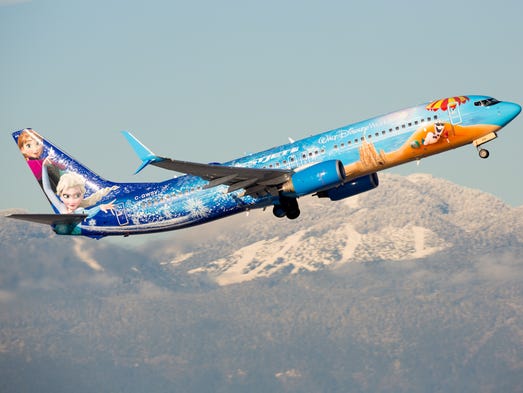 Westjet's 'Frozen' themed Disney jet departs Vancouver International Airport on Dec. 15, 2016. Jeremy Dwyer-Lindgren, special for USA TODAYFullscreen
 Cargo jets for UPS, top, and FedEx, bottom, trade places at Anchorage International Airport on Dec. 3, 2016. Jeremy Dwyer-Lindgren, special for USA TODAYFullscreen
 Outfitted for marine surveillance, a Canadian Government Dash-8 departs Vancouver International Airport in December 2016. Jeremy Dwyer-Lindgren, special for USA TODAYFullscreen
 A gaggle of partially completed Boeing KC-46 tankers awaits their fate while parked at Paine Field near Everett, Wash., in December 2016. Jeremy Dwyer-Lindgren, special for USA TODAYFullscreen
 A Pacific Coastal Beech 1900D taxis in to a small domestic terminal at Vancouver International Airport on Dec. 15, 2016. Jeremy Dwyer-Lindgren, special for USA TODAYFullscreen
 An Augusta Westland 139 helicopter lands at Vancouver International Airport on Dec 15, 2016. Jeremy Dwyer-Lindgren, special for USA TODAYFullscreen
 Snow covers a Cessna seaplane on a very cold day at the Lake Hood Seaplane Base in Anchorage, Alaska, in December 2016. Jeremy Dwyer-Lindgren, special for USA TODAYFullscreen
 A Lufthansa Boeing 747-400 departs Vancouver International Airport on Dec. 15, 2016. Jeremy Dwyer-Lindgren, special for USA TODAYFullscreen
 A Virgin Atlantic Boeing 787-9 takes off for London from San Francisco International Airport on Oct. 23, 2016. Jeremy Dwyer-Lindgren, special for USA TODAYFullscreen
 A KD Air Piper Navajo Chieftan taxies to a gate after landing at Vancouver International Airport on Dec. 15, 2016. Jeremy Dwyer-Lindgren, special for USA TODAYFullscreen
 An Alaska/Horizon Bombardier Q400 painted in an Oregon Ducks livery taxis for departure as a Virgin America Airbus A319 takes off from Seattle-Tacoma International Airport on Dec. 24, 2016. Jeremy Dwyer-Lindgren, special for USA TODAYFullscreen
 An Air Canada Boeing 777-300 departs Vancouver International Airport on Dec. 15, 2016. Jeremy Dwyer-Lindgren, special for USA TODAYFullscreen
 Pilots aboard a UPS Boeing 747 don Santa hats as they ready for a flight across the Pacific on Dec. 3, 2016 in Anchorage, Alaska. Jeremy Dwyer-Lindgren, special for USA TODAYFullscreen
 A China Eastern Airbus A330 takes off from Vancouver International Airport on Dec. 15, 2016. Jeremy Dwyer-Lindgren, special for USA TODAYFullscreen
 An Air China Boeing 747-400 lands at Anchorage International Airport on Dec. 3, 2016. Jeremy Dwyer-Lindgren, special for USA TODAYFullscreen
 A Saudi Arabian Boeing 777-300 delivers from Paine Field in Everett, Wash., on Dec. 24, 2016. Jeremy Dwyer-Lindgren, special for USA TODAYFullscreen
 The winter holiday travel season was one of the busiest ever in 2016-17. Here crowds pulse through Charlotte Douglas International Airport on Jan. 4, 2017. Ben Mutzabaugh, USA TODAYFullscreen
 An unfinished Boeing 747-8 rests outside at Paine Field, near Everett, WA, in December of 2016. Jeremy Dwyer-Lindgren, special for USA TODAYFullscreen
 The Caribbean Sea and Mexico's Yucatan coastline as seen from American Airlines Flight 886 from Cancun to Charlotte. Ben Mutzabaugh, USA TODAYFullscreen
 Jets at one of San Francisco International Airport's international concourses in October 2016. Jeremy Dwyer-Lindgren, special for USA TODAYFullscreen
 A Centurion Cargo Boeing 747-400 takes off from Anchorage International Airport in December 2016. Jeremy Dwyer-Lindgren, special for USA TODAYFullscreen
 An Emirates Airbus A380 departs for Dubai from San Francisco International Airport on Oct. 23, 2016. Jeremy Dwyer-Lindgren, special for USA TODAYFullscreen
 A United Airlines Boeing 777-300 takes off on a delivery flight from Paine Field, near Everett, Wash,, in late December, 2016. Jeremy Dwyer-Lindgren, special for USA TODAYFullscreen
 A Korean Air Boeing 777-300 lands at Seattle-Tacoma International Airport on Dec. 24, 2016. Jeremy Dwyer-Lindgren, special for USA TODAYFullscreen
 A Hawaiian Airbus A330 takes off from Seattle-Tacoma International Airport on Dec. 24, 2016. Jeremy Dwyer-Lindgren, special for USA TODAYFullscreen
 A China Airlines Cargo Boeing 747 takes off from Anchorage International Airport in December 2016. Jeremy Dwyer-Lindgren, special for USA TODAYFullscreen
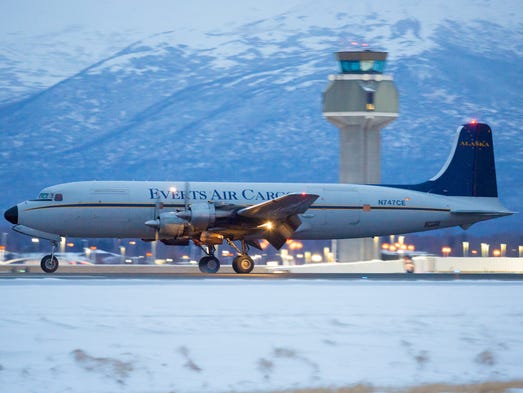 A rare Everts Air Cargo Douglas DC-6 lands at Anchorage International Airport in December 2016. Jeremy Dwyer-Lindgren, special for USA TODAYFullscreen
 A Cargolux Boeing 747-8F freighter jet lands at Anchorage International Airport on Dec. 4, 2016. Jeremy Dwyer-Lindgren, special for USA TODAYFullscreen
 A Lynden Air Cargo Lockheed C-130 makes an aggressive landing approach to Anchorage International Airport in December 2016. Jeremy Dwyer-Lindgren, special for USA TODAYFullscreen
 An EVA Air Cargo Boeing 747-400 freighter lands at Anchorage International Airport in December 2016. Jeremy Dwyer-Lindgren, special for USA TODAYFullscreen
 Purples, pinks, and blues roll over the mountains of Alaska, seen from a Delta Air Lines flight on Dec. 4, 2016. Jeremy Dwyer-Lindgren, special for USA TODAYFullscreen
 A USA TODAY newspaper sits on a first-class seat of an American Airlines A319 for a flight from Charlotte to Cancun, Mexico, on Dec. 30, 2016. Ben Mutzabaugh, USA TODAYFullscreenLike this topic? You may also like these photo galleries:Replay
 1 of 32
 2 of 32
 3 of 32
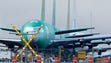 4 of 32
 5 of 32
 6 of 32
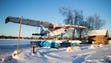 7 of 32
 8 of 32
 9 of 32
 10 of 32
 11 of 32
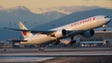 12 of 32
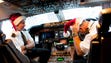 13 of 32
 14 of 32
 15 of 32
 16 of 32
 17 of 32
 18 of 32
 19 of 32
 20 of 32
 21 of 32
 22 of 32
 23 of 32
 24 of 32
 25 of 32
 26 of 32
 27 of 32
 28 of 32
 29 of 32
 30 of 32
 31 of 32
 32 of 32AutoplayShow ThumbnailsShow CaptionsLast SlideNext Slide
 With iconic Mount Rainier forming a dramatic backdrop, a Virgin America Airbus A320 lands at Seattle-Tacoma International Airport in September of 2015. Jeremy Dwyer-Lindgren for USA TODAYFullscreen
 The soft yellowish-gold glow of Washington, D.C.'s Reagan National Airport ceiling greets visitors arriving to the nation's capitol in May of 2015. Jeremy Dwyer-Lindgren for USA TODAYFullscreen
 "Star Wars" characters R2-D2 and C-3P0 pose with All Nippon Airways' R2-D2-themed Boeing 787-9 at a ceremony in Everett, Wash., on Sept. 12, 2015. Jeremy Dwyer-Lindgren for USA TODAYFullscreen
 C-3PO and R2-D2 pass by the engine of a Boeing 787 Dreamliner while welcoming a Star Wars-themed jet to ANA's fleet on Sept. 12, 2015. Jeremy Dwyer-Lindgren for USA TODAYFullscreen
 A brand-new Cargolux Boeing 747-8 cargo jet takes off from Paine Field in Everett, Wash., on Sept. 13, 2015, for a test flight. Jeremy Dwyer-Lindgren for USA TODAYFullscreen
 A rare Boeing 727, operating a charter for a Major League Baseball team, takes off from Boeing Field in Seattle in September of 2015. Jeremy Dwyer-Lindgren for USA TODAYFullscreen
 A Delta Air Lines Boeing 767-300 taxis to the gate on a rainy afternoon in December 2014. Jeremy Dwyer-Lindgren for USA TODAYFullscreen
 Heading out for a test flight, an Avianca Cargo Airbus A330 Freighter is towed to position via a tug at Airbus headquarters in Toulouse, France, in December 2014. Jeremy Dwyer-Lindgren for USA TODAYFullscreen
 With its distinctive architecture, Doha's Hamad International Airport is abuzz with activity despite the 3 a.m. local hour in December of 2014. Jeremy Dwyer-Lindgren for USA TODAYFullscreen
 An Emirates Airbus A380 superjumbo taxis to the gate after landing in Houston in December 2014. Jeremy Dwyer-Lindgren for USA TODAYFullscreen
 An American Airlines Boeing 737-800 departs Phoenix Sky Harbor in January of 2015. Jeremy Dwyer-Lindgren for USA TODAYFullscreen
 Cessnas trade places on a taxiway at Paine Field in Everett, Wash., in February of 2015. Jeremy Dwyer-Lindgren for USA TODAYFullscreen
 F-18 Growler fighter jets practice carrier landings at a remote landing strip on Whidbey Island in Washington State in March of 2015. Jeremy Dwyer-Lindgren for USA TODAYFullscreen
 ANA's R2-D2-themed Boeing 787 Dreamliner after it emerged from a Boeing hangar in Everett, Wash., on Sept. 12, 2015. Jeremy Dwyer-Lindgren for USA TODAYFullscreen
 The unfinished nose of a 777-300, seen during a tour of Boeing'swidebody jet factory inEverett, Wash., onJune 1, 2015. Jeremy Dwyer-Lindgren for USA TODAYFullscreen